The customer cannot leave
Forty minutes of captive dwell time is the rarest thing in retail, and almost nothing currently monetises it.
A laundromat is the only retail counter where the customer cannot leave. That dwell time is the scarcest thing in retail, and today most laundromats monetise it with a vending machine.
$100.00
Bitcoin · bought while the dryer runs
Laundromat economics are about machines, utilities and rent, and every operator eventually looks for a second revenue line on the same footprint. The usual answers are vending, a change machine, wash-dry-fold, or an ATM — all of them small.
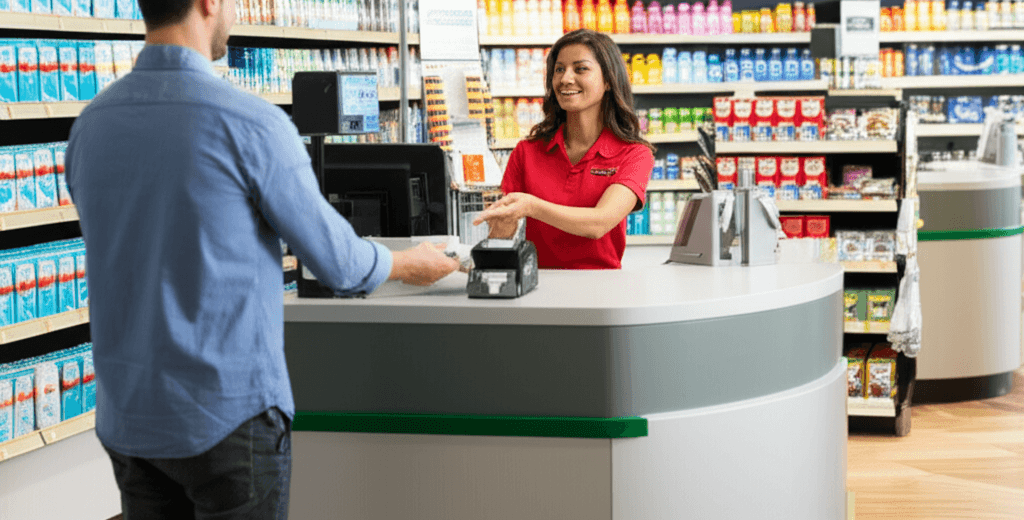
What a laundromat actually has that other retailers do not is time. A customer is on your premises for the better part of an hour and has, by definition, brought cash. A first-time crypto verification that feels like an imposition at a gas station register is a pleasant way to spend two of those minutes.
The constraint is staffing. This is a counter service, so it works at attended sites and does not work at unattended ones. If your location has an attendant during the day, this is one of the better uses of their idle time.
Why it fits
Every store type in this program runs the same platform. What changes is the customer, the ticket size and the objection — so this is the part written for you rather than for everybody.
Forty minutes of captive dwell time is the rarest thing in retail, and almost nothing currently monetises it.
Everyone in the building has brought money to feed machines with. The payment method is not a barrier.
An attended site has staff with gaps in their day. A two-minute order fits those gaps exactly.
No machine, no power drop, no water, no service contract. It runs on a phone.
Getting started
Where the store is, what it already offers, and what your foot traffic looks like. We tell you straight away whether we can serve your market.
Entity documents, ownership and any licences your store already holds. Days, not months.
One session per employee. No crypto knowledge required — the order screen is shorter than a money order form.
Logins switched on, revenue share accruing on every order your staff place.
The arithmetic
You keep a share of every order. Bigger order, bigger share. The examples below use 1% to 3% — your own rate is in your agreement.
| At the counter | Order size | Store keeps (low) | Store keeps (high) |
|---|---|---|---|
| A customer cashes a check and puts part of it into Bitcoin | $200 | $2.00 | $6.00 |
| A regular buys USDT to send to family overseas | $500 | $5.00 | $15.00 |
| A customer sells crypto and takes the cash | $1,000 | $10.00 | $30.00 |
| A small business owner buys on payday, every other week | $2,500 | $25.00 | $75.00 |
| One larger order, the kind an ATM's daily cap refuses | $10,000 | $100.00 | $300.00 |
The figures above are worked examples, not projected or guaranteed earnings. They show how the arithmetic works on a given order size at an illustrative revenue-share range. Your actual rate is set in your agent agreement, and what any individual store earns depends on its foot traffic, its neighbourhood, its hours and how many customers it serves. Anytime Capital does not promise any level of income.
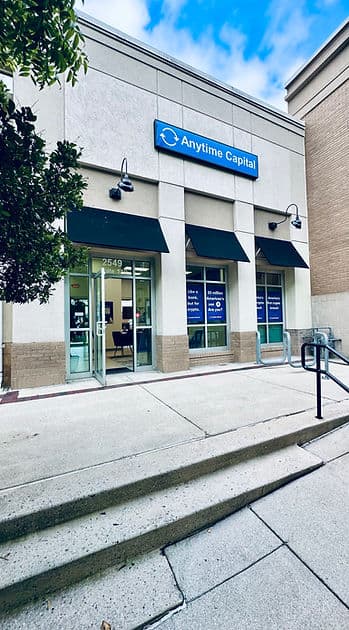

Anytime Capital runs its own branches in Atlanta and Miami. Partner stores run the same counter service.
This is a staffed service. An employee signs in, verifies the customer and places the order, which means an unattended laundromat cannot run it. If your model is card-operated and unstaffed, a kiosk is the arrangement that fits your site and there is no point pretending otherwise.
For attended sites, the picture is unusually good. Attendant time is idle by design. The job is to be there, help with machines and handle problems. A crypto order uses two minutes of it, at a revenue per minute nothing else in the building comes close to.
Wash-dry-fold operations are the strongest fit of all, because there is already a counter, already a transaction and already a customer waiting.
Laundromat customers skew toward renters, shift workers and multi-generational households in dense neighbourhoods — a demographic with high cash usage, high remittance activity and low bank penetration. That is close to a textbook description of the retail crypto customer.
They also come weekly, at roughly the same time, which is the repeat pattern that makes a verified customer valuable rather than a one-off.
In practice the first crypto customers in a laundromat are usually people who noticed the attendant serving somebody else and asked what it was.
Keep reading
The numbers, the rules and the alternative you have probably been offered.
No. An employee has to sign in and place the order, so the program only works at attended sites. For unattended locations, a kiosk is the arrangement that fits.
The customer base skews toward cash-heavy, high-remittance, low-bank-penetration households, which is the core retail crypto demographic. The dwell time is what makes serving them practical.
One session. The order screen is short and needs no knowledge of cryptocurrency.
No. It runs in a browser on a phone or tablet. There is nothing to install, plumb in or service.
Not to act as a serving location for Anytime Capital's platform. Anytime Capital is the registered money services business and carries the compliance programme for the activity. What applies to your specific store and state is confirmed during onboarding, and nothing here is legal advice.
A share of each order, set in your agent agreement. Because crypto is priced as a percentage of the order rather than a flat fee, the revenue moves with the ticket. The earnings page works the arithmetic through at five order sizes.
Tell us where the store is and what your customers keep asking for. We will tell you what we can offer at your location.