Answer
What is a merchant account?
Quick answer
A merchant account is a business's agreement with an acquiring bank that lets it accept card payments: card sales settle into it, and the money is then paid out to the business's bank account. You either hold one in your own name or use a provider that holds it for you.
Updated October 2026. Evergreen page — refreshed in place as facts change.
- Dedicated account
- Days–weeks
- Application and underwriting first
- Via a facilitator
- Same day
- Most complete Anytime Capital applications
- Owners verified
- 25%+
- Plus one controlling officer
- Rolling reserve
- 5–10%
- Of sales, often held 90–180 days (2026)
- MATCH listing
- 5 years
- Mastercard's list of terminated merchants
- Dispute exposure
- 120 days
- Why funds can be held after closing
- Merchant ID
- MID
- Your business's identity in the card networks
- Custom terms
- $1M+ a year
- Pricing, payouts and reserves at Anytime Capital
Most small businesses now take cards without ever applying for a merchant account, because the provider they signed up with holds one for them. That is usually the right choice, but it changes who decides on holds, reserves and account reviews. This page covers what the merchant account does, the two ways to have one, and what to expect from underwriting.
Payment methods on this page




What does a merchant account actually do?
A merchant account is less a bank account you log into than a relationship. The acquiring bank agrees to sponsor your business into the card networks, takes on the risk that your customers dispute payments, and identifies your business with a merchant ID. Card sales are batched, settled into the merchant account, and paid out to your business bank account after fees.
Because the acquirer is on the hook if your business disappears with customers' money or cannot cover its chargebacks, it decides whether to approve you, on what terms, and whether to hold back part of your sales. Those decisions are what this page is really about.
How card sales move through a merchant account
- 1
Sales batched
The day's captured card payments go to the card networks.
End of day - 2
Acquirer settles
Funds arrive in the merchant account, less interchange.
1–2 business days - 3
Reserve held
If your terms include one, a share is set aside.
If applicable - 4
Fees deducted
Network fees and the provider's markup, daily or monthly.
Per your terms - 5
Paid out
The rest goes to your business bank account.
Payout schedule
Your own merchant account or a payment facilitator?
With a dedicated merchant account, your business signs its own agreement with an acquirer, usually through a processor or a reseller, and gets its own merchant ID. With a payment facilitator, the provider holds one master merchant account and boards your business as a sub-merchant under it. Stripe, Square and PayPal work the facilitator way, which is why you can sign up online and take a payment the same day.
The difference shows up later, not at sign-up. A dedicated account takes longer to open but is underwritten once, in depth, with terms written into a contract. A facilitator underwrites lightly up front and watches activity continuously, so a review can come months in, when sales jump or disputes rise.
| Dedicated merchant account | Payment facilitator (sub-merchant) | |
|---|---|---|
| Who holds the acquirer relationship | Your business, under its own merchant ID | The provider, with your business boarded under its account |
| Opening | Application, documents and underwriting; days to weeks | Online sign-up, often the same day |
| Underwriting | In depth before approval | Light at sign-up, continuous monitoring afterwards |
| Pricing | Often interchange-plus, negotiable at volume, with monthly fees | Usually one flat published rate |
| Contract | Often a term with an early termination fee | Usually month to month |
| Reserves and holds | Negotiated up front and written into the agreement | Applied by the provider when its monitoring flags risk |
How long does it take to get a merchant account?
Through a payment facilitator, sign-up takes minutes and approval often comes the same day, because the provider verifies the business and its owners and then watches activity from the first sale. At Anytime Capital, most applications with complete documents are approved the same day.
A dedicated merchant account takes days to weeks. The application goes to an underwriter, who may ask for processing statements, financial statements, a personal guarantee or more detail on how and when you deliver, and high-risk industries take longest. The clock does not stop at approval, either: the terms you agree decide how long money can be held later, as the chart shows.
From application to the longest holds
- Facilitator sign-upMinutes
- Facilitator approvalOften same day
- Dedicated accountDays to weeks
- Rolling reserve holdOften 90–180 days
- MATCH listingGenerally 5 years
How does merchant underwriting work?
Underwriting is the acquirer's, or the provider's, assessment of how likely your business is to generate losses it would have to cover. Expect questions about what you sell and how you deliver it, your expected monthly volume and average sale, your refund policy, your processing and dispute history, and the owners behind the business. Owners of a dedicated merchant account are often asked for a personal guarantee.
The biggest risk factor is time between payment and delivery. A café that hands over the coffee at the till carries little risk; a business taking payment months before an event, a trip or a custom build carries a lot, because every undelivered order is a potential chargeback.
- Formation documents and tax ID for the business
- Identity documents for owners, usually anyone with 25% or more
- A website or description showing products, prices and refund policy
- Processing statements from a previous provider, if you have them
- Expected monthly volume, average sale and delivery timeline
What are reserves and payout holds?
A reserve is money held back from your sales to cover future refunds and chargebacks. It is not a fee; it is released to you later, but it is not available in the meantime. Reserves are common for new businesses, businesses that deliver long after payment, and industries with higher dispute rates. Terms vary widely, so read them before you accept.
A hold is a pause on payouts, often triggered by something the risk team did not expect: a sudden jump in volume, an unusually large payment, a run of refunds or disputes, or a change in what you sell. Telling your provider in advance about a big launch or a large order is the simplest way to avoid one.
Rolling reserves are commonly quoted at 5% to 10% of each day's sales, held for 90 to 180 days, the period in which most chargebacks on those sales would arrive (industry ranges, 2026). At a steady $50,000 a month in card sales, a 10% reserve held for 90 days builds to about $15,000 that is yours but not yet spendable, which is worth knowing before you plan payroll around your payouts.
| Reserve type | How it works |
|---|---|
| Rolling reserve | A percentage of each day's sales is held and released after a set period, so money keeps cycling back to you |
| Up-front (fixed) reserve | A lump sum is held at the start, or built up from early sales, and kept for the life of the account or a set period |
| Minimum reserve | A floor balance kept back at all times, with sales above it paid out normally |
What happens if a merchant account is closed?
An acquirer or provider can close an account for excessive chargebacks, fraud, selling prohibited goods, or breaking card-network or security rules. Funds may be held for months afterwards to cover disputes still to come, because customers can file chargebacks long after a sale.
In serious cases, an acquirer can add the business and its owners to Mastercard's MATCH list (Member Alert to Control High-Risk Merchants), which other acquirers check before approving an application. Listings generally stay for five years and make it much harder to open a new merchant account. Keeping disputes low and descriptions accurate is the best protection. This is general information, not legal advice.
Which businesses do providers treat as high risk?
High risk, in payments, means a higher chance of chargebacks or losses that the acquirer would have to cover, not that the business is doing anything wrong. Providers weigh the industry, the gap between payment and delivery, the average sale and the history of the business and its owners.
Many of these businesses can still get a merchant account, often with a reserve, higher pricing or a specialist provider. Most providers publish a list of the businesses they do not serve or serve only on review; reading it before you apply saves an application that was never going to pass.
- Payment long before delivery: travel, events, pre-orders, custom builds and annual memberships
- Recurring billing with free trials, which draws 'forgot to cancel' disputes
- Regulated or age-restricted goods, such as tobacco, CBD, firearms and some supplements
- Large average sales, or volume spikes far above the business's history
- A past account closed for disputes or fraud, or an owner on the MATCH list
Merchant account vs business bank account: where does the money sit?
In two places that work as a pair. The merchant account is where card sales settle; the business bank account is where they are paid out and where rent, suppliers and payroll are paid from. In a traditional setup the two sit at different companies, with a payout between them that takes a business day or more and a reconciliation at each end.
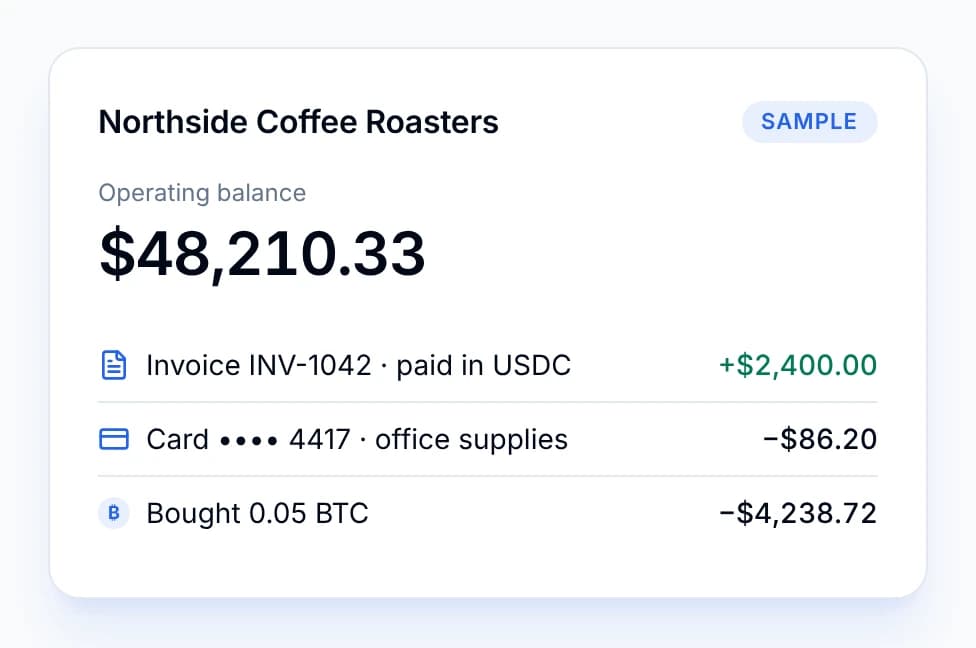
On Anytime Capital the two sit on one platform. Card sales settle to your payments balance and sweep instantly into your Anytime Capital business account, which has US account and routing numbers in your business's name and sends and receives by ACH, wire, RTP and FedNow. Anytime Capital is a fintech company, not a bank; banking services are provided by our licensed banking partners.
Do you need your own merchant account?
Most small and growing businesses do not. An all-in-one provider gets you taking payments the same day, with one rate and one dashboard. A dedicated merchant account becomes worth it when your volume is large enough for interchange-plus pricing to save real money, when your industry is one that facilitators do not serve, or when you need settlement terms written into a contract.
Anytime Capital Payments is the all-in-one model: you do not apply for a merchant account yourself, processing is provided by our licensed partners, and most applications with complete documents are approved the same day. Settled sales sweep instantly into your Anytime Capital business account, and businesses processing $1M+ a year can agree custom pricing, payout schedules and reserve terms with a named account manager.
On Anytime Capital
FedNow, RTP, Fedwire and ACH in one business account
Pick the rail per payment instead of per bank: instant when it has to land now, a wire when the counterparty insists, ACH when it can wait, and local rails or stablecoins when it crosses a border. Sign up online in minutes.
- RTP & FedNowSeconds, any day
- WireSame day
- ACH to vendorsSame day or next day
- 71+ countriesMinutes to same day
- USDC & USDTMinutes, including weekends
Business account
Send and receive on every US rail
US account and routing numbers in your business's own name. Get paid by FedNow, RTP, wire or ACH, and pay the same ways, with every movement in one ledger.
Enterprise treasury
Operating accounts, approvals, API
Operating accounts and sub-accounts, approval rules and an audit trail, plus an API and signed webhooks for moving money from your own systems.
Personal
A cash account with a debit card
A cash account and card with early direct deposit and crypto built in, opened online in minutes, with no minimum balance.
Frequently Asked Questions
How do I know if I have my own merchant account?
If you signed a merchant agreement with an acquiring bank or a reseller, received a merchant ID and pay separately for a gateway, you have your own. If you signed up online with an all-in-one provider and started the same day, the provider most likely holds the merchant account and your business is boarded under it.
Is a merchant account the same as a business bank account?
No. The merchant account receives and settles card sales; your business bank account is where the money goes afterwards and where you pay bills from. Some platforms put the two side by side so that sales land straight in the account you spend from.
What is a merchant ID?
A merchant ID, or MID, is the number the acquirer uses to identify a business in the card networks. A business with its own merchant account has its own MID; a sub-merchant of a payment facilitator is identified within the provider's account.
Why would a provider hold my payouts?
Usually because something looks riskier than expected: a sudden jump in volume, an unusually large payment, a rise in refunds or disputes, or a change in what you sell. Answering the provider's questions quickly and telling it about big launches in advance helps holds clear faster.
Can I get a merchant account with bad credit?
Often, yes, especially through a payment facilitator, which weighs the business's activity more than the owner's credit. A dedicated merchant account may ask for a personal guarantee and look at credit, and may approve with a reserve rather than decline.
What is the MATCH list?
Mastercard's database of businesses whose merchant accounts were closed for reasons such as excessive chargebacks or fraud. Acquirers check it before approving an application, and listings generally stay for five years. General information, not legal advice.
Can I get a merchant account the same day?
Through a payment facilitator, often yes: you sign up online, verification usually finishes within the day, and most complete Anytime Capital applications are approved the same day. A dedicated merchant account in your own name usually takes days to a few weeks, and longer for high-risk industries.
What is a high-risk merchant account?
A merchant account for a business the acquirer rates as more likely to produce chargebacks or losses, such as travel, subscriptions with free trials or regulated goods. It usually comes with higher pricing, a reserve and closer monitoring, and is often offered by specialist providers. General information, not legal advice.
Keep reading
Important Disclosures
- Third-party fees and product details cited on this page are each company's published US pricing, or industry-typical ranges, as of the date shown and may have changed. Check current pricing with the provider before you decide.
- Information on this page is general and educational — it is not financial, legal, or tax advice.
- Anytime Capital is a fintech company, not a bank. Payment processing, banking and payout services are provided by Anytime Capital's licensed partners. Rates shown are for US card payments; international cards, currency conversion and disputes may carry additional fees shown in your dashboard before you accept a payment.
- Anytime Capital is a fintech company, not a bank. Banking services are provided by our licensed banking partners. Stablecoins and other digital assets are not bank deposits, are not FDIC-insured and may lose value.